← All Openings
Two Knights Defense C55–C59
Develop before defending
Main Line (4.Ng5 d5)
A combative response to the Italian Game: instead of playing 3...Bc5 (Giuoco Piano), Black develops the knight to f6, immediately threatening ...Nxe4. The Two Knights Defense leads to some of the sharpest and most tactical positions in all of chess.
The Two Knights Defense is perfect for players who enjoy sharp, tactical battles. Black allows White to play the aggressive 4.Ng5, leading to wild complications where one mistake can be fatal. It has been a favourite of attacking players for centuries.
Lines
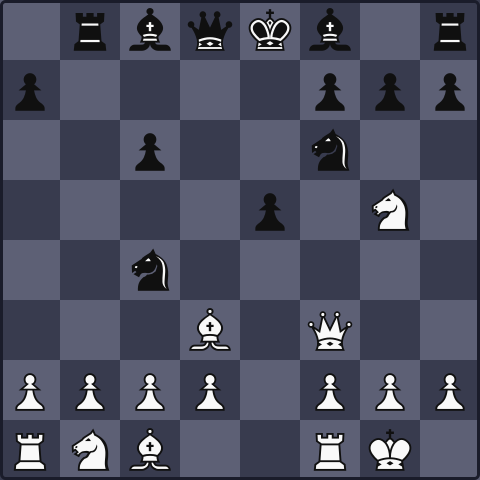
Main Line (4.Ng5 d5)
advanced
1. e4 e5
2. Nf3 Nc6
3. Bc4 Nf6
4. Ng5 d5
5. exd5 Na5
6. Bb5+ c6
7. dxc6 bxc6
8. Qf3 Rb8
9. Bd3 Nc4
10. O-O
The sharpest line: White sacrifices a knight on f7 to expose the Black king. Both sides walk a tightrope — White attacks, Black defends with the king in the centre.
2. Nf3 Nc6
3. Bc4 Nf6
4. Ng5 d5
5. exd5 Na5
6. Bb5+ c6
7. dxc6 bxc6
8. Qf3 Rb8
9. Bd3 Nc4
10. O-O
Max Lange Attack
advanced
1. e4 e5
2. Nf3 Nc6
3. Bc4 Nf6
4. d4 exd4
5. O-O Bc5
6. e5 d5
7. exf6 dxc4
8. Re1+ Be6
9. Ng5 Qxf6
10. Nxe6 fxe6
11. Rxe6+ Kf8
White plays d4 and O-O aggressively, sacrificing a pawn for a massive attack. The Max Lange Attack is one of the most dangerous and beautiful attacking lines in chess.
2. Nf3 Nc6
3. Bc4 Nf6
4. d4 exd4
5. O-O Bc5
6. e5 d5
7. exf6 dxc4
8. Re1+ Be6
9. Ng5 Qxf6
10. Nxe6 fxe6
11. Rxe6+ Kf8
Quiet Variation (4.d3)
beginner
1. e4 e5
2. Nf3 Nc6
3. Bc4 Nf6
4. d3 Be7
5. O-O O-O
6. Nc3 d6
7. a4 h6
8. Be3 Be6
9. Bxe6 fxe6
10. Qd2 Nd7
A solid, positional approach. White avoids the wild complications of 4.Ng5 and plays quiet development. This line transposes to the Giuoco Pianissimo, with a slight space advantage.
2. Nf3 Nc6
3. Bc4 Nf6
4. d3 Be7
5. O-O O-O
6. Nc3 d6
7. a4 h6
8. Be3 Be6
9. Bxe6 fxe6
10. Qd2 Nd7
Ulvestad Variation (5...b5)
advanced
1. e4 e5
2. Nf3 Nc6
3. Bc4 Nf6
4. Ng5 d5
5. exd5 b5
6. Bf1 Nd4
7. c3 Nxd5
8. Ne4 Nf5
9. Bxb5+ Bd7
10. Qh5 g6
11. Qf3 Bg7
12. Bxd7+ Qxd7
Instead of recapturing on d5 with the knight, Black plays ...b5, offering a pawn to divert White's bishop and gain time for development. A sharp, tactical alternative in the Two Knights.
2. Nf3 Nc6
3. Bc4 Nf6
4. Ng5 d5
5. exd5 b5
6. Bf1 Nd4
7. c3 Nxd5
8. Ne4 Nf5
9. Bxb5+ Bd7
10. Qh5 g6
11. Qf3 Bg7
12. Bxd7+ Qxd7
Fritz Variation (5...Nd4)
advanced
1. e4 e5
2. Nf3 Nc6
3. Bc4 Nf6
4. Ng5 d5
5. exd5 Nd4
6. c3 b5
7. Bf1 Nxd5
8. Ne4 Nf5
9. Bxb5+ Bd7
10. Qh5 g6
11. Qf3 Bg7
Black jumps the knight to d4, attacking the bishop and creating immediate tactical complications. The Fritz Variation leads to wild play where both kings can come under attack.
2. Nf3 Nc6
3. Bc4 Nf6
4. Ng5 d5
5. exd5 Nd4
6. c3 b5
7. Bf1 Nxd5
8. Ne4 Nf5
9. Bxb5+ Bd7
10. Qh5 g6
11. Qf3 Bg7
Traxler Counter-Attack
advanced
1. e4 e5
2. Nf3 Nc6
3. Bc4 Nf6
4. Ng5 Bc5
5. Nxf7 Bxf2+
6. Kxf2 Nxe4+
7. Kg1 Qh4
8. g3 Nxg3
9. hxg3 Qxg3+
10. Kf1 Rf8
11. Qh5 d5
12. Bxd5 Nd4
13. Qh4 Qxh4
14. Rxh4 Rxf7
15. Bxf7+ Kxf7
16. Rxd4 exd4
Instead of defending the f7 pawn, Black plays ...Bc5, threatening a devastating checkmate on f2. One of the most treacherous counter-attacks in all of chess.
2. Nf3 Nc6
3. Bc4 Nf6
4. Ng5 Bc5
5. Nxf7 Bxf2+
6. Kxf2 Nxe4+
7. Kg1 Qh4
8. g3 Nxg3
9. hxg3 Qxg3+
10. Kf1 Rf8
11. Qh5 d5
12. Bxd5 Nd4
13. Qh4 Qxh4
14. Rxh4 Rxf7
15. Bxf7+ Kxf7
16. Rxd4 exd4