← All Openings
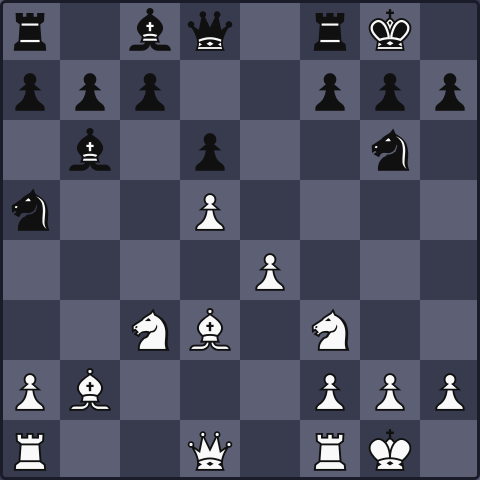
Evans Gambit C51–C52
Sacrifice for initiative
Main Line (4...Bxb4 5.c3 Ba5)
A sharp and romantic gambit: after 1.e4 e5 2.Nf3 Nc6 3.Bc4 Bc5, White offers a pawn with 4.b4 to gain time and open lines. The Evans Gambit was one of the most popular openings in the 19th century and remains a potent attacking weapon.
The Evans Gambit offers White tremendous attacking chances for the cost of a single pawn. Development, open lines, and a lead in initiative make it one of the most dangerous gambits in chess. It is perfect for players who enjoy attacking chess and putting pressure on their opponents from the very first moves.
Lines
Main Line (4...Bxb4 5.c3 Ba5)
intermediate
Lasker Defense (5...Bc5)
advanced
1. e4 e5
2. Nf3 Nc6
3. Bc4 Bc5
4. b4 Bxb4
5. c3 Bc5
6. d4 exd4
7. O-O d6
8. cxd4 Bb6
9. Nc3 Na5
10. Bg5 f6
11. Be3 Nxc4
12. Qa4+ Bd7
13. Qxc4 Ne7
Instead of retreating to a5, Black returns the bishop to c5. This defence was championed by Emanuel Lasker and is considered one of the most resilient.
2. Nf3 Nc6
3. Bc4 Bc5
4. b4 Bxb4
5. c3 Bc5
6. d4 exd4
7. O-O d6
8. cxd4 Bb6
9. Nc3 Na5
10. Bg5 f6
11. Be3 Nxc4
12. Qa4+ Bd7
13. Qxc4 Ne7
Compromised Defense (5...Be7)
intermediate
1. e4 e5
2. Nf3 Nc6
3. Bc4 Bc5
4. b4 Bxb4
5. c3 Be7
6. d4 Na5
7. Bd3 d5
8. Qe2 Nf6
9. O-O O-O
Black retreats the bishop to e7, a modest but solid square. This defence is called "Compromised" because Black concedes more space to White, but the position remains playable and less theoretical.
2. Nf3 Nc6
3. Bc4 Bc5
4. b4 Bxb4
5. c3 Be7
6. d4 Na5
7. Bd3 d5
8. Qe2 Nf6
9. O-O O-O
Evans Gambit Declined (4...Bb6)
intermediate
1. e4 e5
2. Nf3 Nc6
3. Bc4 Bc5
4. b4 Bb6
5. a4 a6
6. Bd5 Nf6
7. Bxc6 dxc6
8. O-O Bg4
9. h3 Bh5
10. g4 Bg6
11. Nxe5 Nxe4
12. Qf3 Qd4
Black declines the gambit by retreating the bishop to b6. White still gets a slight space advantage and can expand on the queenside, but Black avoids the sharp tactics of the accepted lines.
2. Nf3 Nc6
3. Bc4 Bc5
4. b4 Bb6
5. a4 a6
6. Bd5 Nf6
7. Bxc6 dxc6
8. O-O Bg4
9. h3 Bh5
10. g4 Bg6
11. Nxe5 Nxe4
12. Qf3 Qd4
Slow Variation (6.O-O)
intermediate
1. e4 e5
2. Nf3 Nc6
3. Bc4 Bc5
4. b4 Bxb4
5. c3 Ba5
6. O-O d6
7. d4 Bb6
8. Bg5 Nf6
9. Nbd2 O-O
White castles before pushing d4, a slower approach that keeps the position more closed. This variation was a favourite of the Romantic era and remains a practical alternative.
2. Nf3 Nc6
3. Bc4 Bc5
4. b4 Bxb4
5. c3 Ba5
6. O-O d6
7. d4 Bb6
8. Bg5 Nf6
9. Nbd2 O-O