← All Openings
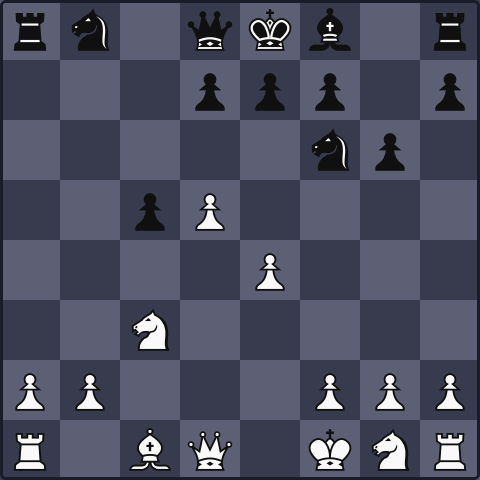
Benko Gambit A57-A59
Queenside pressure for a pawn
Benko Gambit Accepted
Black sacrifices the b5 pawn for long-term queenside pressure and open files. One of the most strategically rich gambits - Black gets lasting queenside compensation that can last into the endgame.
The Benko Gambit is one of the most strategically rich gambits in chess. Black sacrifices the b5 pawn for long-term queenside pressure that can last deep into the endgame. The compensation is positional rather than tactical - open files, active bishops, and enduring initiative.
Lines
Benko Gambit Accepted
intermediate
1. d4 Nf6
2. c4 c5
3. d5 b5
4. cxb5 a6
5. bxa6 Bxa6
6. Nc3 g6
7. e4 Bxf1
8. Kxf1
White accepts both pawns. Black gets open a and b files and the powerful a6 bishop for lasting queenside pressure. White has the material but Black has enduring initiative.
2. c4 c5
3. d5 b5
4. cxb5 a6
5. bxa6 Bxa6
6. Nc3 g6
7. e4 Bxf1
8. Kxf1
Benko Gambit Declined
intermediate
1. d4 Nf6
2. c4 c5
3. d5 b5
4. Nf3
White declines the gambit and develops normally. A solid approach that avoids the complex accepted lines.
2. c4 c5
3. d5 b5
4. Nf3
Center Variation (4.e4)
intermediate
1. d4 Nf6
2. c4 c5
3. d5 b5
4. cxb5 a6
5. e4
White accepts the gambit and immediately builds a strong centre with e4. A principled approach that aims to hold the extra pawn while maintaining central control.
2. c4 c5
3. d5 b5
4. cxb5 a6
5. e4
King's Indian Setup (4...g6)
intermediate
1. d4 Nf6
2. c4 c5
3. d5 g6
4. Nc3 Bg7
5. e4 d6
6. Nf3 O-O
7. Be2 b5
Black plays a King's Indian setup with ...g6 instead of the immediate ...b5. White builds a traditional KID structure and Black can still sacrifice on b5 later if the timing is right.
2. c4 c5
3. d5 g6
4. Nc3 Bg7
5. e4 d6
6. Nf3 O-O
7. Be2 b5
Zaitsev Variation (5.b6)
advanced
1. d4 Nf6
2. c4 c5
3. d5 b5
4. cxb5 a6
5. b6 Qxb6
6. Nc3 d6
7. e4 g6
8. Nf3 Bg7
9. Be2 O-O
Instead of the usual 5.bxa6, White plays 5.b6 avoiding the open a-file. Black recaptures with the queen on b6, gaining activity in exchange for White keeping the extra a-pawn.
2. c4 c5
3. d5 b5
4. cxb5 a6
5. b6 Qxb6
6. Nc3 d6
7. e4 g6
8. Nf3 Bg7
9. Be2 O-O